 Divya Katha
Courage and duty
Abhimanyu walking into the chakravyuha, Arjuna's doubt on the battlefield and Krishna's answer in the Gita: what it means to do what is yours to do.
Divya Katha is a mythology app in Hindi: the Mahabharat, the Ramayan, the Puranas and the Upanishads as short vertical videos of about a minute, to watch on a bus, in a queue or before sleep. Here is what it is like inside, piece by piece.

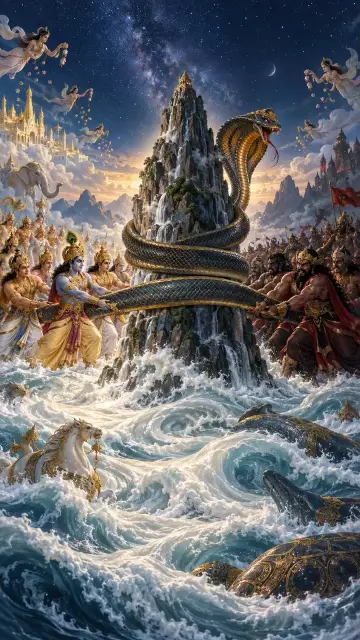
Krishna lifting Govardhan, Hanuman on the shore before the leap, Shiva at the churning of the ocean: every episode is a vertical video in Hindi, about a minute long, somewhere between 35 and 70 seconds. A whole scene in the time it takes to sip chai: long enough for one moment of the story to land, short enough to fit into the spare minute you already have. Watch one, or let a whole evening go by.
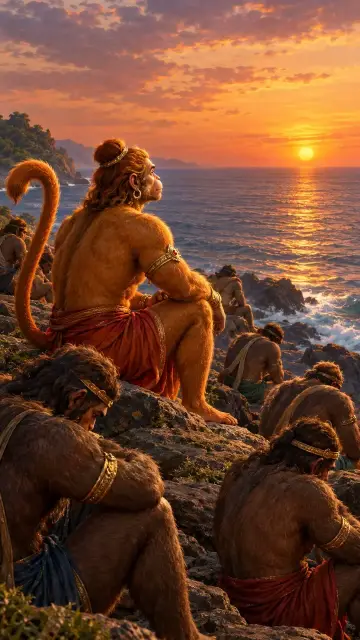
Many stories are told की नज़र से, through one character's own eyes. Sanjaya describing the war to a blind king. Lakshman walking behind Rama into the forest. Nachiketa waiting three nights at the door of Yama. Hanuman, Nandi, Vidura, Savitri, Maitreyi. You do not just hear what happened; you feel what it was like to stand there.
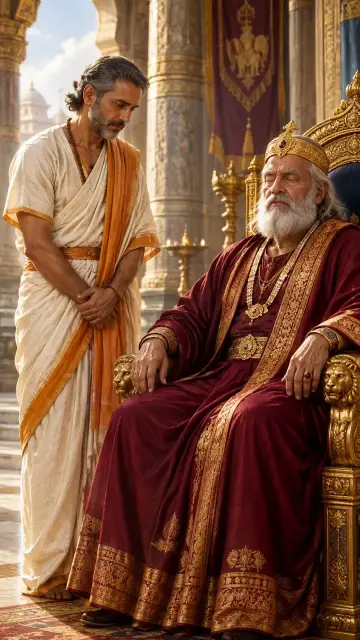
Swipe up for the next episode, down to go back. When one ends, the next begins on its own, so a story flows the way it would if someone were telling it to you. Close the app halfway through and it remembers where you were in each story you have started.
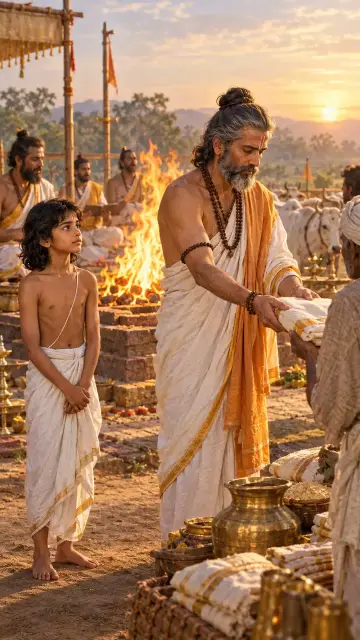
Every story comes from a text Bharat has kept for centuries. Dhruva's resolve is from the Bhagavata Purana, Nachiketa's questions from the Katha Upanishad, Savitri's courage from the Mahabharata. The episodes stay close to those tellings, so what you watch is the story as it was handed down, not a version made up for the screen.
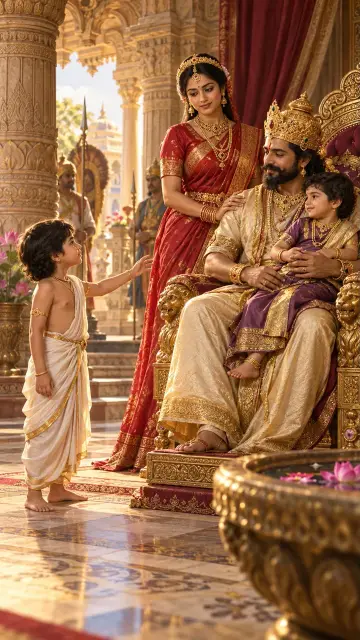
When the ocean was churned, poison rose before the amrit, and Shiva drank it so the world could go on. That is the plot. The lesson is older and closer to home: the good things in life often come after the hard ones, and someone has to be willing to carry the bitter part. Every story in Divya Katha holds a lesson like that, carried by a person you come to know.
Stories were always meant to be shared. Like an episode that moved you, leave a comment on it, and share it with the family group or with the friend who keeps asking where some story comes from. The best ones travel from phone to phone the way they once travelled from grandmother to grandchild.
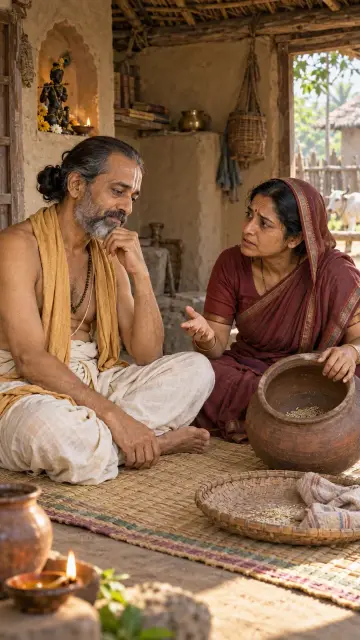
Every festival has a story behind it. Watch it before the day, and the puja, the bonfire or the lamps mean a little more, especially to the children watching with you.
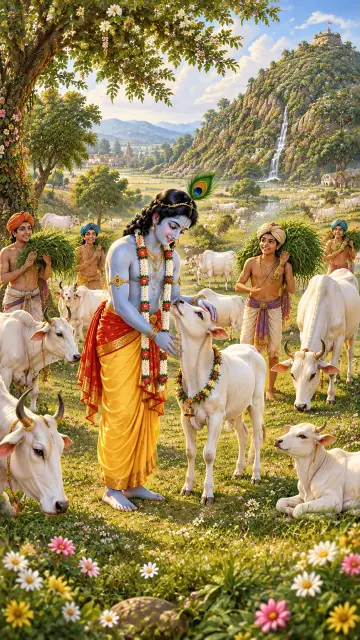
These are the stories दादी-नानी told at bedtime: Dhruva and the pole star, Prahlad in the fire, Krishna lifting Govardhan, Savitri before Yama. An episode is short enough to hold a child's attention and full enough to start a conversation, so grandparents, parents and children can watch together and talk about what it meant.
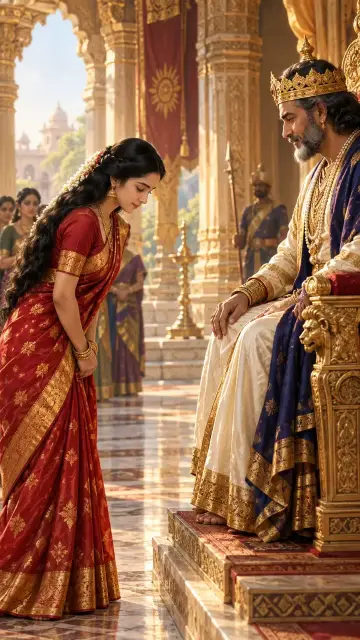
What you take away
These stories have been told for thousands of years because they keep teaching. A minute with them is a minute with the questions every generation faces: what is right, what is owed, what is worth holding on to.
Abhimanyu walking into the chakravyuha, Arjuna's doubt on the battlefield and Krishna's answer in the Gita: what it means to do what is yours to do.
Dhruva's steady prayer, Hanuman's service, Savitri's resolve before Yama himself: faith that does not bend when it is tested.
Krishna running barefoot to greet poor Sudama, a brother forgiven, an enemy spared: the generosity that holds families and friendships together.
Nachiketa asking Yama what happens after death, Maitreyi asking what truly lasts: the Upanishads' questions, in a minute you can sit with.
The stories your दादी and नानी told, ready to watch together with the children and talk about afterwards.
One episode on the way to work, one before sleep. Over weeks, the great epics stop being names you know and become stories you carry.
In Hindi, a minute at a time, with a lesson in every story. Android, on Google Play.