Divya Katha
Savitri was a princess who chose to marry Satyavan knowing he was destined to die within a year, and when Yama, the lord of death, came for him, she followed Yama and spoke so wisely that he granted her boons, until she won back Satyavan's life. The story is told in the Vana Parva of the Mahabharata, and it is the story behind the Vat Savitri fast that married women keep to this day.
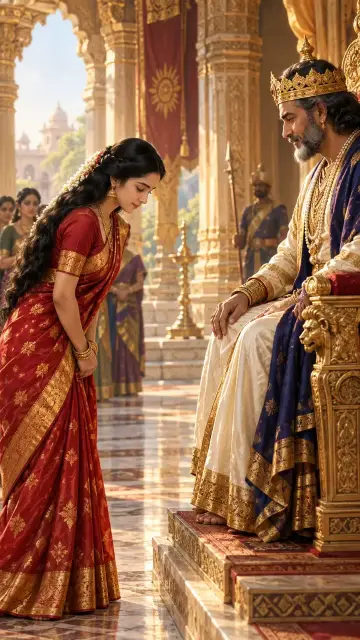
The sage Markandeya tells it to Yudhishthira during the Pandavas' years in the forest, when Yudhishthira asks whether there has ever been a woman as devoted as Draupadi. In answer, Markandeya tells him about Savitri.
Savitri Satyavan ki katha in short (संक्षेप में)
सावित्री सत्यवान की कथा महाभारत के वन पर्व में ऋषि मार्कण्डेय युधिष्ठिर को सुनाते हैं। मद्र देश के राजा अश्वपति की पुत्री सावित्री ने नारद मुनि की चेतावनी के बाद भी सत्यवान को पति चुना, यह जानते हुए कि एक वर्ष में उनकी मृत्यु निश्चित है। जब यमराज सत्यवान के प्राण लेकर चले, तो सावित्री उनके पीछे चलती रहीं और धर्म की ऐसी बातें कहीं कि यम ने प्रसन्न होकर उन्हें एक के बाद एक वरदान दिए। सावित्री की बुद्धि और निष्ठा से प्रसन्न होकर अंत में यमराज ने सत्यवान के प्राण लौटा दिए। इसी कथा की स्मृति में विवाहित स्त्रियाँ वट सावित्री व्रत रखती हैं।
Who was Savitri?
Ashvapati, king of Madra, had no children. For eighteen years he kept vows and made offerings to the goddess Savitri, until she appeared and promised him a daughter. The girl was named Savitri after the goddess. She grew up so radiant that no prince dared to ask for her hand, so her father told her to travel and choose a husband herself.
Why did Savitri choose Satyavan?
In a forest hermitage Savitri met Satyavan, son of Dyumatsena, a king of the Shalvas who had gone blind and lost his kingdom to an enemy and now lived in the forest with his wife and son. Satyavan was truthful, generous and kind, and Savitri chose him in her heart.
When she returned home, the sage Narada was with her father. Hearing her choice, Narada said Satyavan had every virtue, but one fault outweighed them all: he would die exactly one year from that day. Ashvapati begged his daughter to choose again.
Savitri refused. A choice made once, she said, is made once. Narada blessed the marriage, and Savitri went to live in the forest hermitage, put away her royal clothes, and cared for her husband and his blind parents.
The three-day fast
Savitri counted the days. Three days before the appointed one, she began a vow of fasting and standing, day and night, for three days and nights. On the last morning she asked to go with Satyavan into the forest, where he went to gather fruit and cut wood.
As he was splitting wood, Satyavan's head began to ache. He lay down with his head in Savitri's lap. Then she saw a figure in red, with a noose in his hand, standing over her husband. It was Yama. He drew out Satyavan's life, the Mahabharata says a being the size of a thumb, bound it with his noose and turned to the south.
Savitri aur Yamraj: how did Savitri save Satyavan?
Savitri followed. Yama told her to go back and perform her husband's last rites; she had come as far as anyone could. Savitri kept walking and kept talking. She spoke about dharma, about friendship that comes from walking seven steps together, about the company of the good, and about Yama himself, who is called Dharmaraja because he deals with all beings justly.
Each time she spoke, Yama was pleased and offered a boon, anything except Satyavan's life:
- She asked that her blind father-in-law regain his sight and strength.
- She asked that he regain his lost kingdom.
- She asked for a hundred sons for her own father, who had no son.
- She asked for a hundred sons born of her and Satyavan.
Yama granted the fourth boon too, without thinking. Then Savitri pointed out that it could only come true if Satyavan lived. Moved by her words more than trapped by them, Yama gave her a last boon without conditions, and she asked for her husband's life. Yama released him and blessed them both with a long life together.
Satyavan woke as if from a long sleep. They walked home through the dark forest to find that Dyumatsena could see again. Soon after, messengers came to say his enemy had been overthrown and his people wanted him back as king.
Vat Savitri vrat katha: what is the connection?
Vat Savitri Vrat (वट सावित्री व्रत) is kept by married women in Savitri's honour, praying for their husbands' long life. Women fast, worship the banyan tree (vat or bargad), walk around it and tie threads around its trunk, and listen to or read Savitri's story, the vrat katha.
In much of north India it falls on Jyeshtha Amavasya. In Maharashtra, Gujarat and parts of the south it is kept on Jyeshtha Purnima as Vat Purnima. Popular tradition says Satyavan lay under a banyan tree when Yama came, and the banyan, which lives for centuries and keeps sending down new roots, stands for long life. The Mahabharata itself simply sets the scene in the forest.
What does Savitri's story teach?
- Choose with open eyes. Savitri knew the cost of her choice and made it anyway.
- Calm words can be stronger than force. She did not fight Yama or weep at him. She reasoned with him, respectfully and patiently.
- Think of others even in your worst hour. Her first boons were for her father-in-law and her father, not herself.
- Devotion is active. Savitri's love was not passive waiting; it was fasting, walking, thinking and speaking.
Watch the story in one minute a day
Savitri's story is told in her own voice as one-minute Hindi episodes in the Divya Katha app, a lesson in love, wit and resolve. For another person who faced Yama and asked the right questions, read the story of Nachiketa, and for more stories to pass on, see why ancient stories still matter.
Questions people ask
Where is the story of Savitri and Satyavan told?
It is told in the Vana Parva (also called the Aranyaka Parva) of the Mahabharata. The sage Markandeya tells it to Yudhishthira during the Pandavas' exile, when Yudhishthira asks whether there has ever been a woman as devoted as Draupadi.
How did Savitri save Satyavan?
When Yama came to take Satyavan's life, Savitri followed him and spoke to him with such wisdom about dharma and the company of the good that he granted her a series of boons. She first asked for her father-in-law's sight and kingdom and for sons for her own father, then for sons of her own with Satyavan, which could only come true if Satyavan lived. Pleased with her, Yama returned his life.
What is Vat Savitri Vrat?
Vat Savitri is a fast kept by married women in honour of Savitri, praying for their husbands' long life. Women worship the banyan tree, the vat or bargad, and tie threads around its trunk. In much of north India it falls on Jyeshtha Amavasya; in Maharashtra, Gujarat and parts of the south it is kept on Jyeshtha Purnima as Vat Purnima.
Why is the banyan tree worshipped on Vat Savitri?
In popular tradition, Satyavan lay with his head in Savitri's lap under a banyan tree when Yama came, and the banyan, which lives for centuries, stands for long life. The Mahabharata itself simply places the scene in the forest.
What did Savitri say to Yamraj?
In the Savitri Yamraj samvad, Savitri spoke about dharma, about the friendship that comes from walking seven steps together, about the company of the good, and about Yama himself, who is called Dharmaraja because he deals with all beings justly. Each time she spoke, Yama was pleased and offered her a boon.
What boons did Yamraj give Savitri?
Sight and strength for her blind father-in-law Dyumatsena, the return of his lost kingdom, a hundred sons for her own father, a hundred sons for herself and Satyavan, and finally Satyavan's life.